| AKIMATSURI |
(Hiroshi Shimizu, 2012) |
35" | M |
 |
|
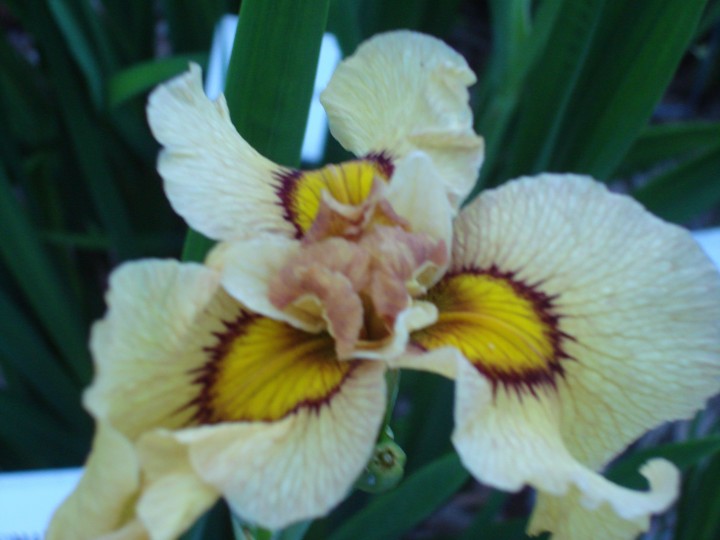
Akimatsuri sports a large ruffled creamy yellow flower and a clump has a mass of bloom.
The style arm tips are a cream color but have peach veins which give an overall look of peach in the center of the flower.
The signal area is very large and rounded, accentuated by the stunning brick red eyelash pattern.
The stalks have two branches plus the terminal and often carry nine buds. $15.00 | |
|
| ALABAMA BLUE FIN |
(Copeland, 2017) |
38" | M-L |
 |
|
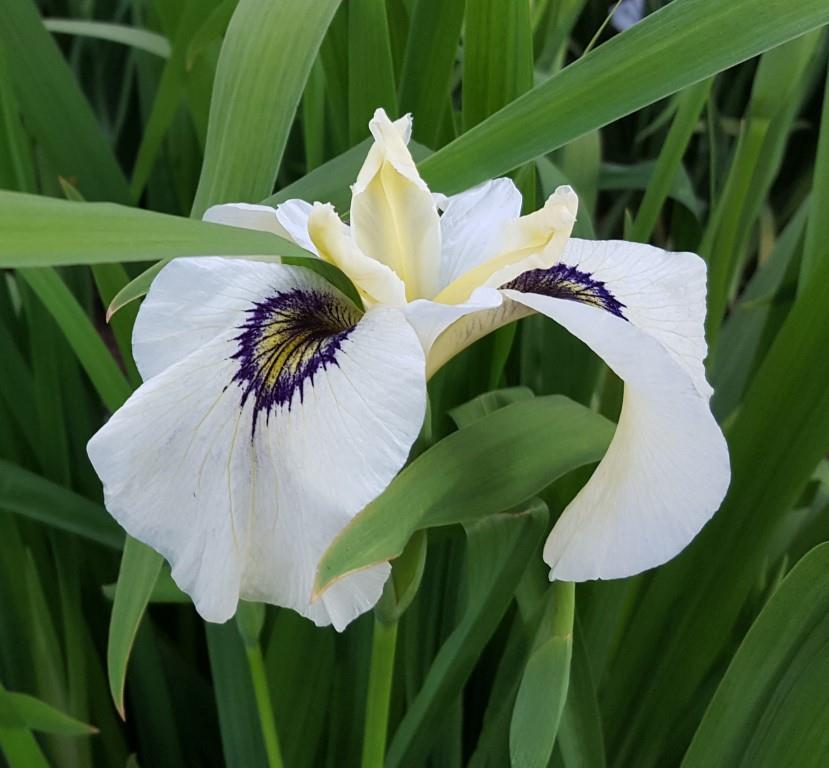
Cream white standards, Falls very light yellow washed with violet, Violet blue signal. Vigorous.$15.00 | |
|
| AUSE |
(Hiroshi Shimizu, 2014) |
40-42" | EM |
 |
|
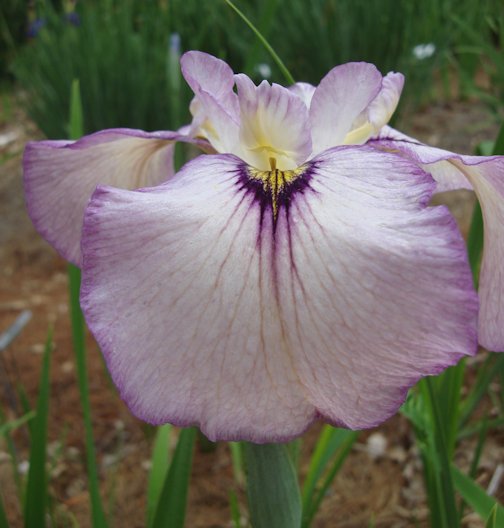
Ause has a white background under the deep rose color which is not seen until the flower opens fully and has been out for a while. When the flowers change color as much as this one does, it gives a lovely effect to the clump.
The stalk has three branches plus the terminal, giving it a very long season of bloom. This is one of the deepest rim patterns I have seen in the pseudatas. [WITHDRAWN FOR INCREASE] | |
|
| BENIBUTAE |
(Hiroshi Shimizu, 2015) |
32" | E-M |
 |
|
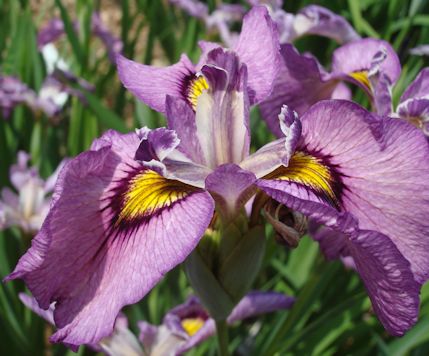
Medium purple flowers over variegated foliage. Small standards. Many stalks have 10 flowers, 4 in the terminal and 3 in each of the two branches. "Double Eyelid of Rouge" $15.00 | |
|
| BYAKUYA NO KUNI |
(Hiroshi Shimizu, 2005) |
37" | E-M |
 |
|
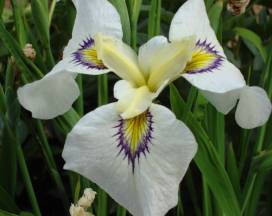
This pseudata is one of the most vigorous and showy in the garden. The cream flowers are accented with yellow style arms and signal and dark purple eyelashes.
Stalks carry at least 7 buds on two branches with a triple-socketed terminal. Foliage is a bright green with just a tint of yellow.
The name describes the white color of the flower and means “land of the midnight sun”. $10.00 | |
|
| CHAKI |
(Hiroshi Shimizu, 2015) |
38" | E |
 |
|
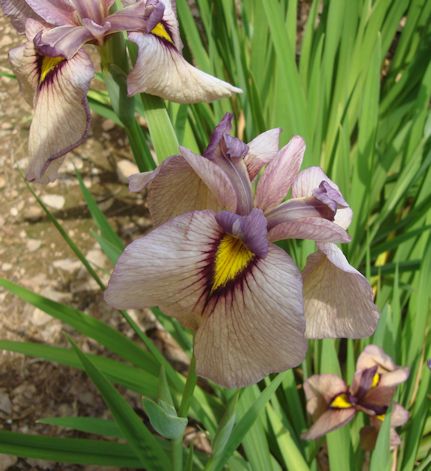
Taller, more vigorous than Kinshikou. Peach, veined wine, but with dark style arms. Flowers enlarge and lighten over time to the color shown in the photo. Beautiful foliage. "Tea Party" $15.00 | |
|
| CHASTUBO |
(Hiroshi Shimizu, 2017) |
26" | M |
 |
|
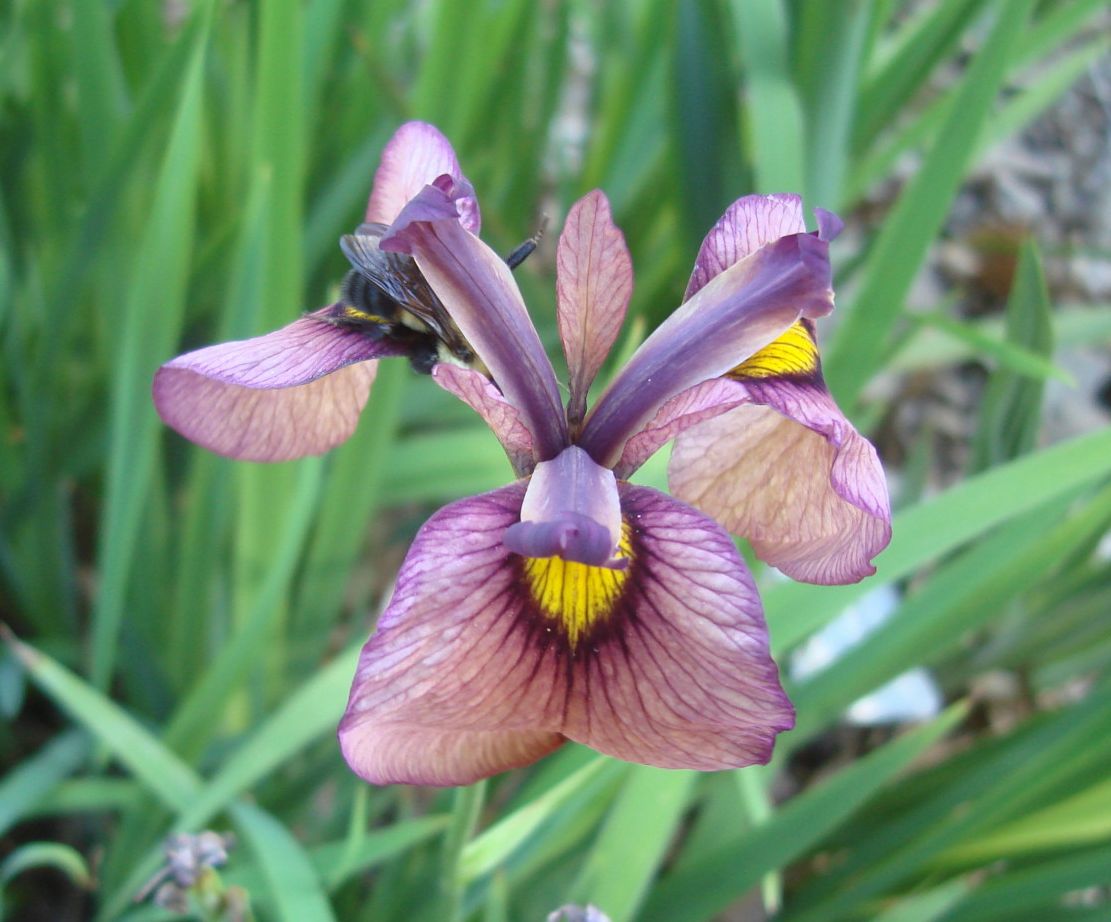
Lovely in a small garden, this introduction is only 26” tall and has small flowers similar in size to a Siberian iris.
Growth is very vigorous, and the plant throws up a multitude of stalks each with five buds.
From a distance it is red, but on closer observation the background is peach overlaid by red veins and a red rim. $10.00 | |
|
| FRENCH BUTTERCREAM |
(Harris, 2016) |
60" | L |
 |
|
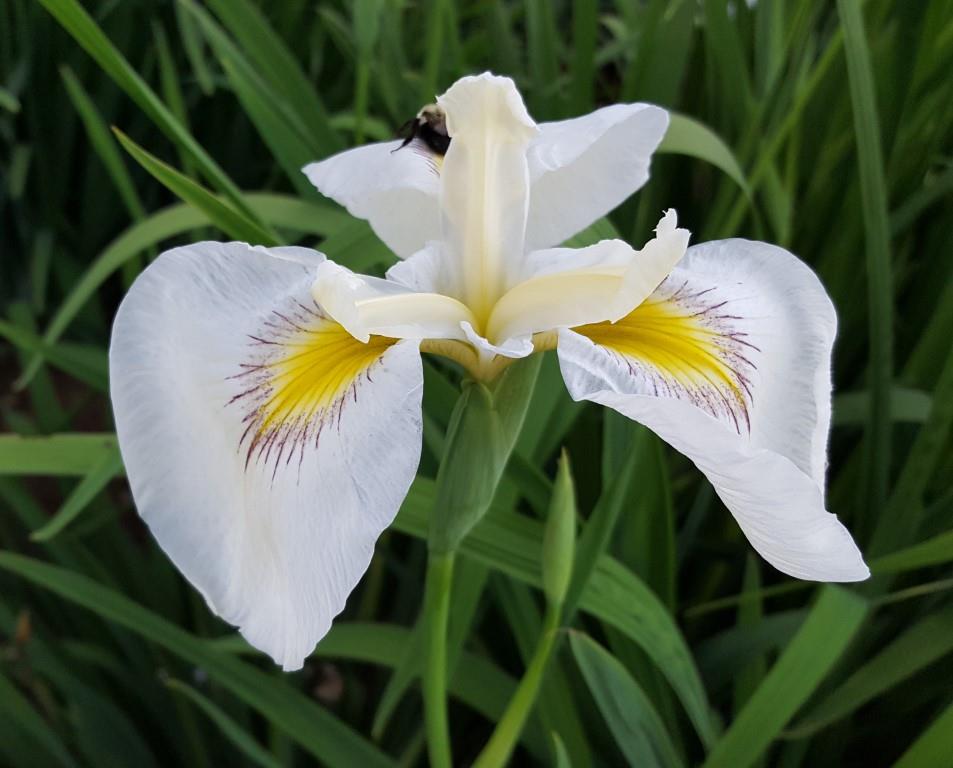
Pale yellow with bright yellow signal surrounded by faint violet markings. Vigorous. $12.00 | |
|
| FURUI SHIRO |
(Hiroshi Shimizu, 2016) |
36" | ML |
 |
|
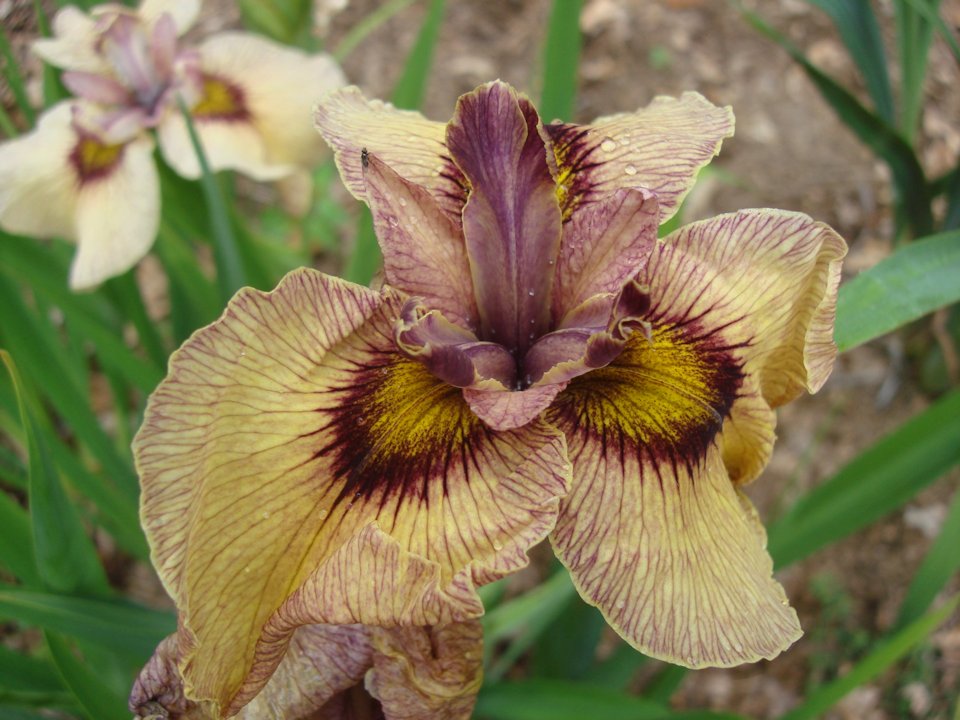
The yellow background is heavily veined maroon red and the eyelash pattern is quite wide and intense red.
There are three branches on the stalk giving about 10 blooms. The terminal on a well grown plant will push a fourth bud to extend the season. The plant is very vigorous here. "Old Castle" $15.00 |
|
|
| HANAGARA |
(Hiroshi Shimizu, 2014) |
48-50" | M |
 |
|
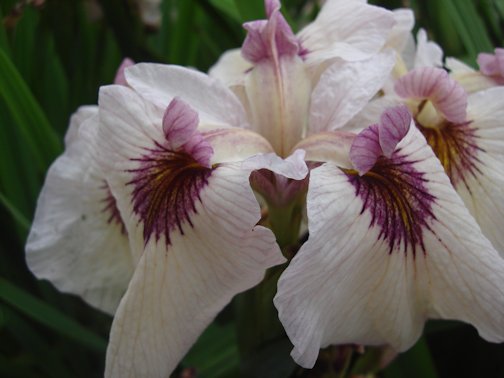
Hanagara is as close to a pink as we have come so far in a plant with vigor, good bud count and garden worthiness. The buds definitely are mauve pink, and when the flowers open the wide tips of the style arms show bright rose pink.
The deep wine overlay on the entire eyelash halo area contributes to the pink on white appearance. As the flower ages the rose color becomes even more of a pink. Three branches produce 10 flowers per stalk. The terminal has four buds! [WITHDRAWN FOR INCREASE] |
|
|
| HIMEBOTARU |
(Hiroshi Shimizu, 2014) |
35" | |
 |
|
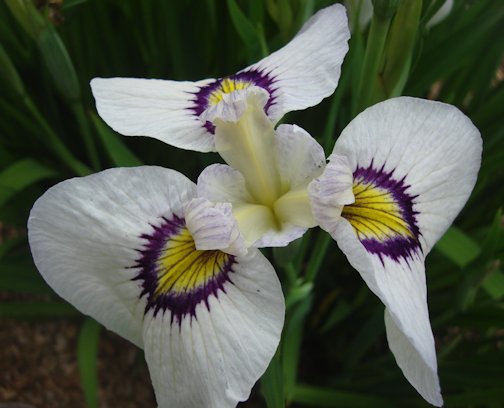
The falls on this variety are more round than the other introduced whites and I think the white is more of a pure white than the others. It has proved to be very vigorous and a heavy bloomer.
Once in a while it will produce flowers with five falls and five style arms. Oh, how I wish it would do that all of the time. $10.00 |
|
|
| KARYU |
(Hiroshi Shimizu, 2010) |
22-27" | ML |
 |
|
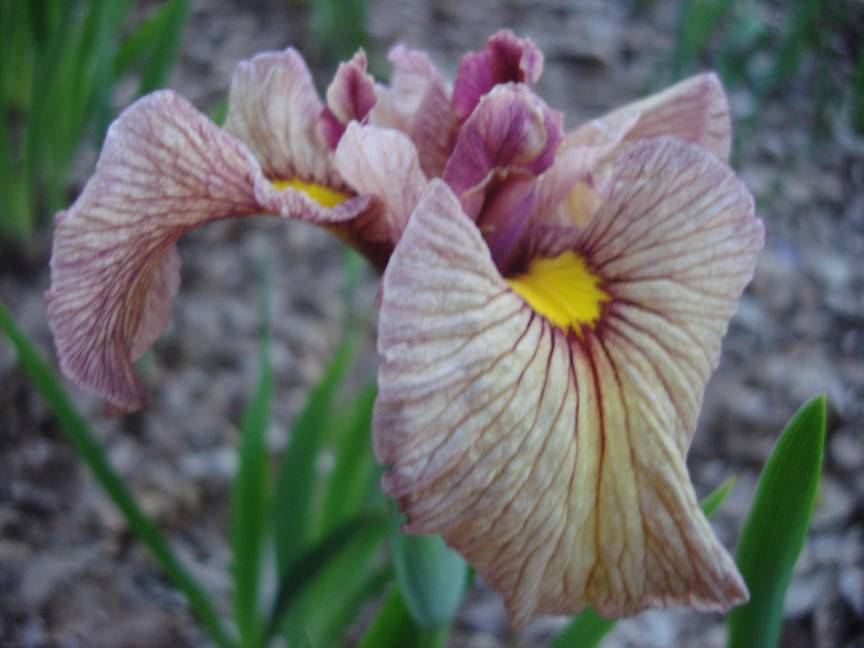
Large ruffled beauty with large bright-yellow signals surrounded by red eyelashes, further set off by wide deep red-purple styles.
The name means “Fire-dragon”. [WITHDRAWN FOR INCREASE] | |
|
| KINSHIKOU |
(Hiroshi Shimizu, 2004) |
37" | E |
 |
|
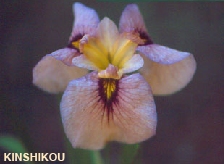
This first pseudata introduction appears PEACH in the garden, but is actually rose over a yellow background.
The deep yellow signal is surrounded by rich dark wine eyelash markings. Styles and very small standards are light yellow.
Three branches carry at least 6 buds. The foliage is a lovely lime green, and the name means "golden monkey". HM2010 $15.00 | |
|
| OKAGAMI |
(Hiroshi Shimizu, 2008) |
34-36" | M |
 |
|
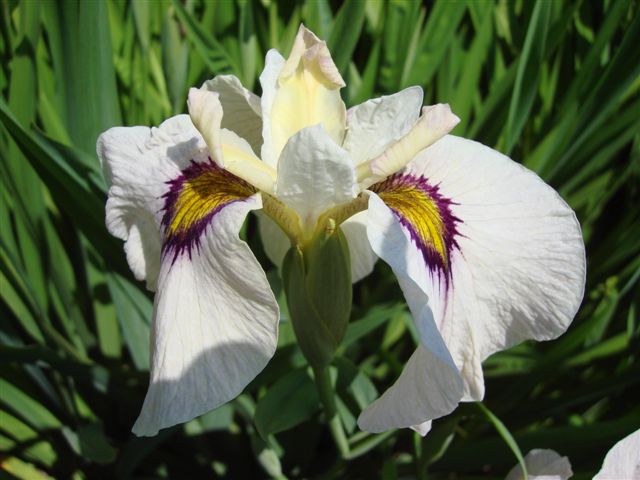
This pseudata was awarded the best seedling in our beardless show in 2006. The color changes slightly as the flowers open giving a clump an interesting appearance.
The standards are white but have a purple blush upon opening, style arms are creamy yellow with the ends brushed lavender and the falls have a very pointed bright wine colored eyelash.
The name means “Big Mirror”. RPM2017 $10.00 | |
|
| PIXIE WON |
(Copeland, 1997) |
18" | E |
 |
|
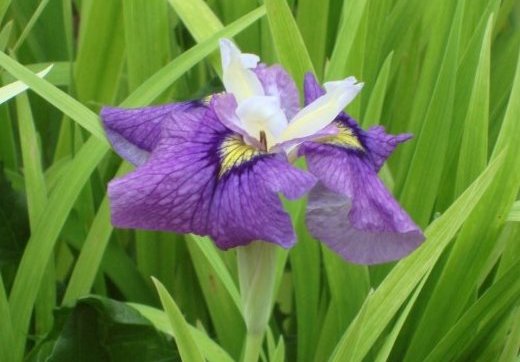
Red-violet falls with sulphur yellow signal, pansy violet halo and cream stylearms. Standards are violet, small, and rounded. Beautiful yellow-green foliage all season. RPM 2005. [WITHDRAWN FOR INCREASE] | |
|
| RORYU |
(Hiroshi Shimizu, 2011) |
40-43" | M |
 |
|
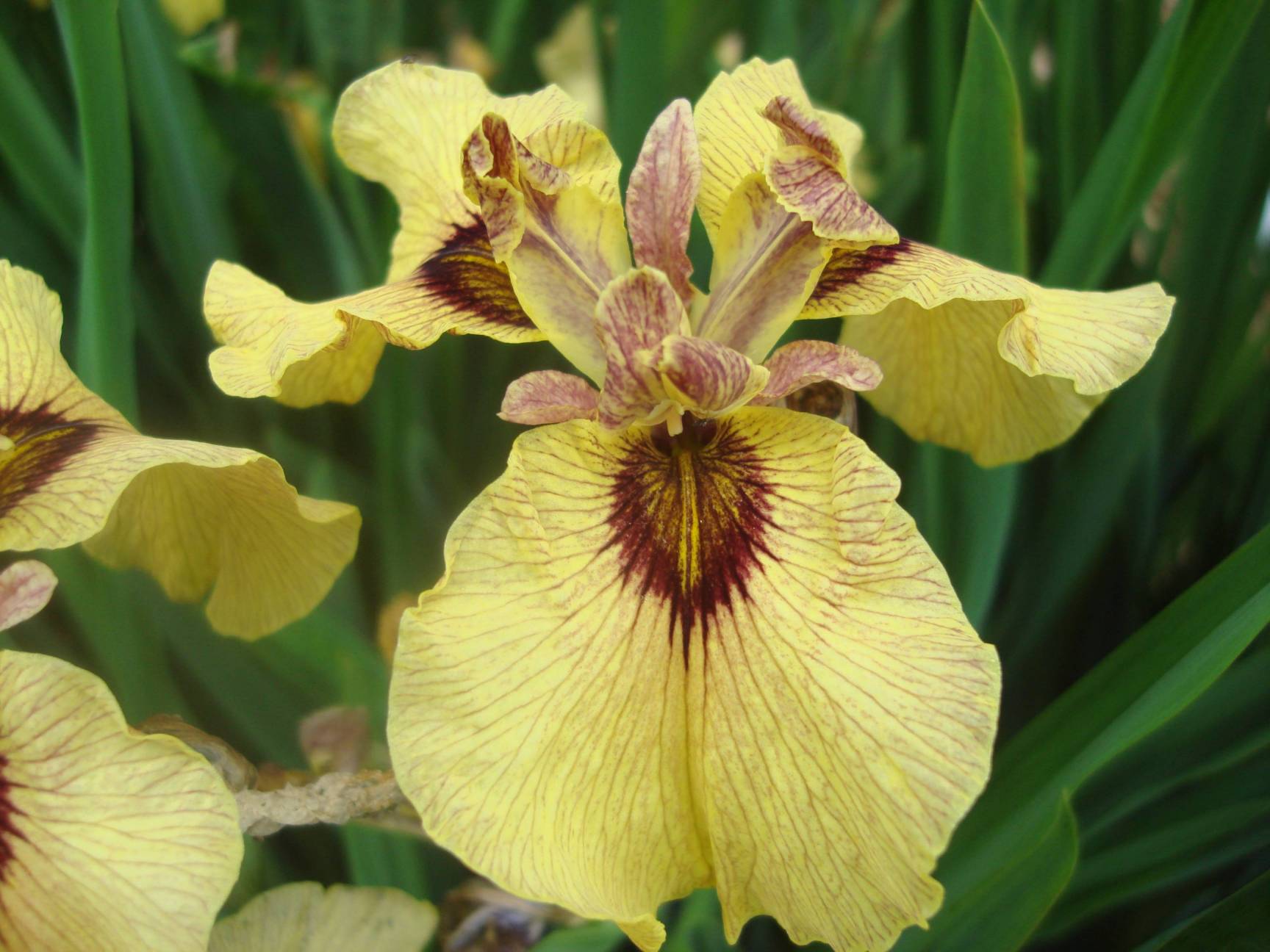
This tall beauty opens from a burgundy bud which shows a distinct yellow rim. With two branches and a terminal it can open nine flowers in succession.
Lemon falls are lightly veined red and are rounded and ruffled. The eyelash pattern almost completely covers the yellow signal.
The name means "An Old Dragon". $15.00 | |
|
| RYU NO KANMURI |
(Hiroshi Shimizu, 2015) |
44" | M |
 |
|
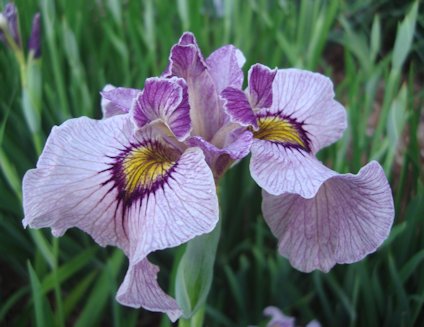
Rosier and much more ruffled than Take no Sato. Tall, with 8 buds. Style arms are showy with a distinctive and definite white edge "Crown of Dragon" [withdrawn for increase] | |
|
| RYUGAN |
(Hiroshi Shimizu, 2008) |
33" | VE |
 |
|
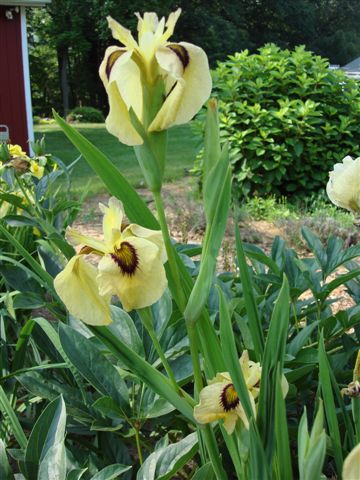
This is my first pseudata to bloom. It blooms about two weeks before the first Japanese irises. The falls are light yellow and are sanded with a dark wine purple.
The style arms are bright yellow with a ruffled end which is also sanded with the deep wine color.
The standards are very small and are a yellow which fades to a lighter cream as the flow matures. Stalks are very well branched and carry the terminal and 3 branches.
There are often three flowers in bloom at one time. The stalk has at least eight buds and the terminal is triple socketed. The foliage on this variety is quite nice.
The name means "Dragon's Eye". $10.00 | |
|
| RYUMON |
(Hiroshi Shimizu, 2015) |
44" | L |
 |
|
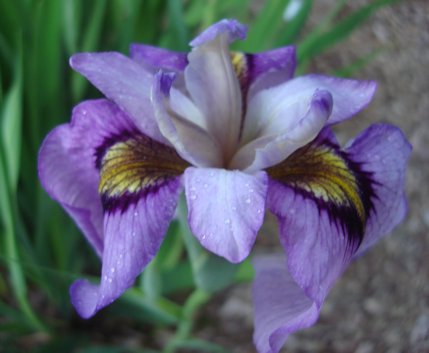
Beautiful landscape plant in an attractive shade of lavender. 9 buds produce large flowers, becoming larger and lighter the second day, over clean foliage. "Dragon Gate" $15.00 | |
|
| SHIMO MURASAKI |
(Hiroshi Shimizu, 2021) |
16" | M |
 |
|
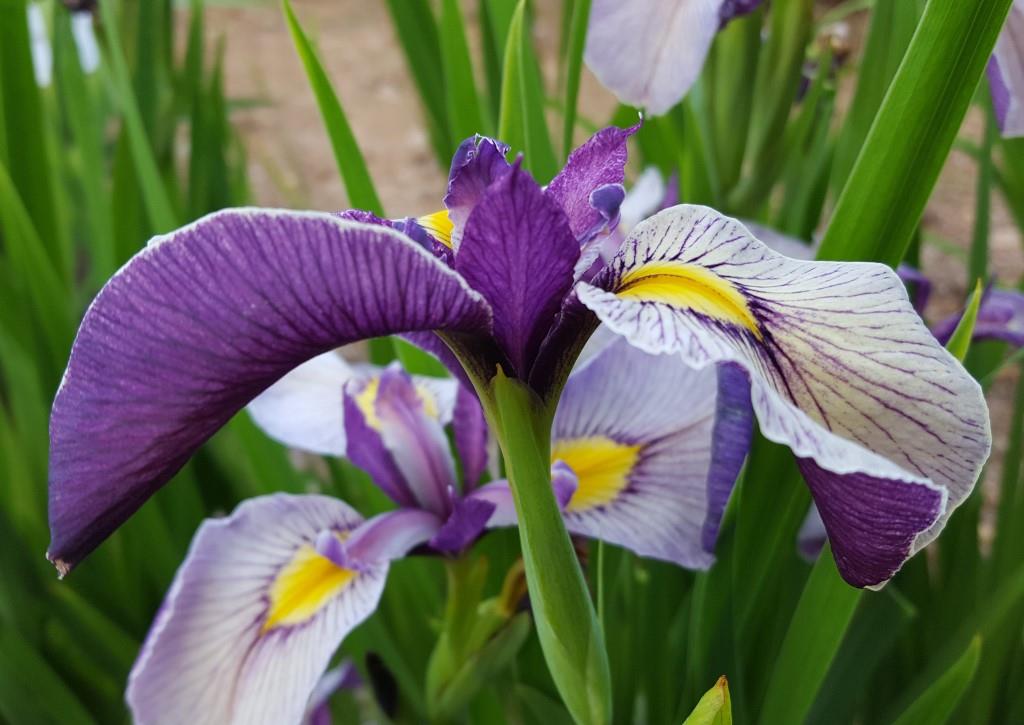
This is a dwarf pseudata, not as vigorous as most of its relatives. Buds appear dark purple but open to a white ground with purple veining, the underside of the petals still showing solid purple.
The name means “Purple Lining”. $20.00 | |
|
| SHIRYUKYO |
(Hiroshi Shimizu, 2008) |
45-54" | M-L |
 |
|
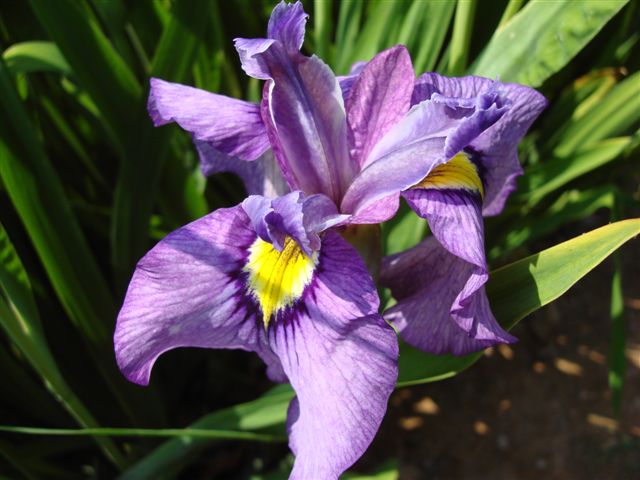
This later blooming pseudata has been incredible in the garden.
It bloomed at a height of 45" in the stock garden but grew to 54" in a landscaped area which received extra water and fertilizer, and
bloom continued for over three weeks. The stalks have a triple socketed terminal and three branches all rising far above the foliage.
The purple falls with a darker purple rim roll and twist to give a ruffled effect. Flowers are also large for a pseudata, averaging about 6˝".
The name means “Purple Dragon’s Valley”. HM2011 $10.00 | |
|
| SHORYU NO MAI |
(Hiroshi Shimizu, 2011) |
45" | ML |
 |
|
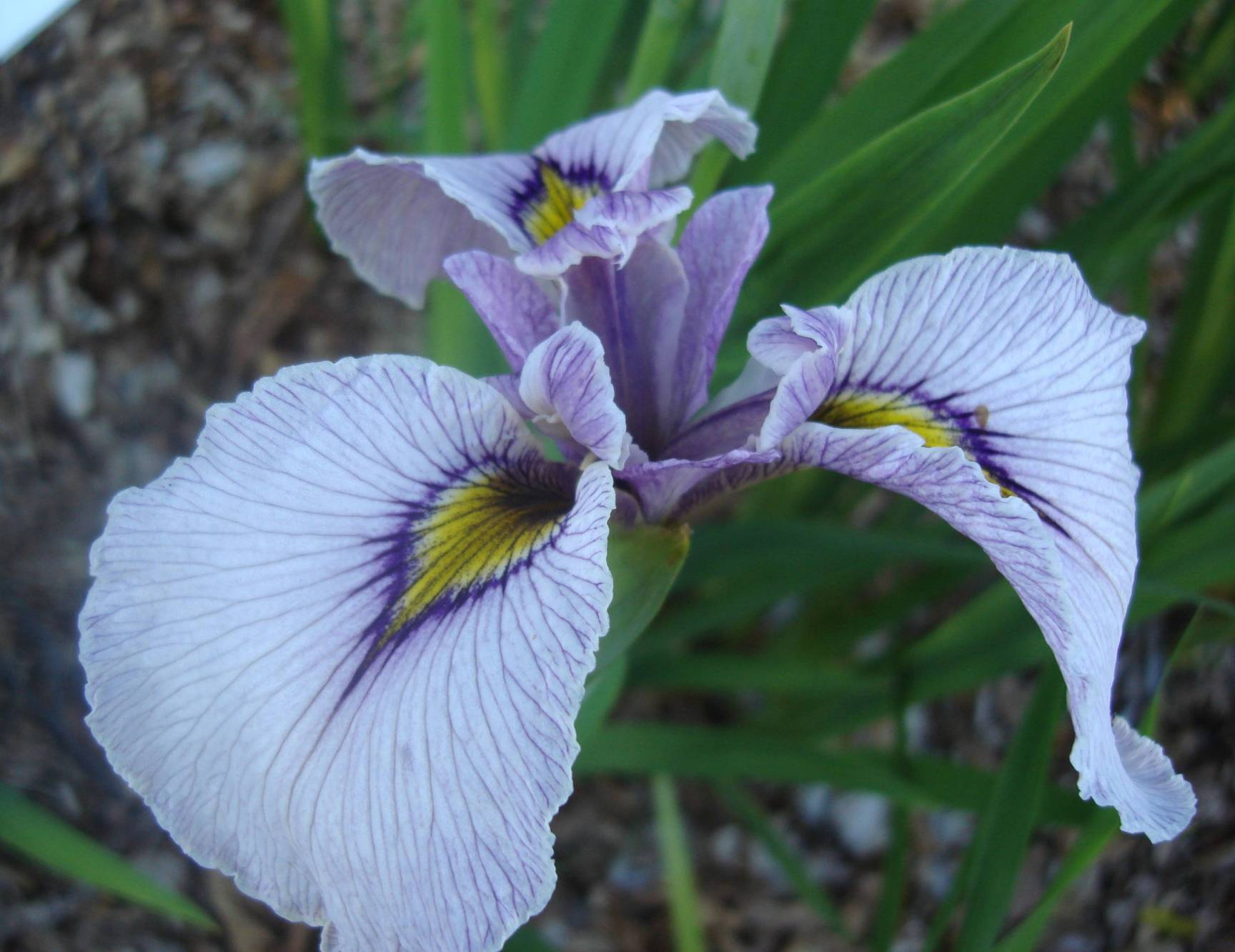
Rising high above extremely nice foliage, this ruffled beauty has a very distinct form to the flower falls.
The inner part of the fall is narrow and then widens out and remains in a more horizontal plane. The edges of the falls ruffle nicely.
The name means “Dance of a Flying Dragon”. [withdrawn for increase] | |
|
| TAKAMAGAHARA |
(Hiroshi Shimizu, 2010) |
37-40" | M |
 |
|
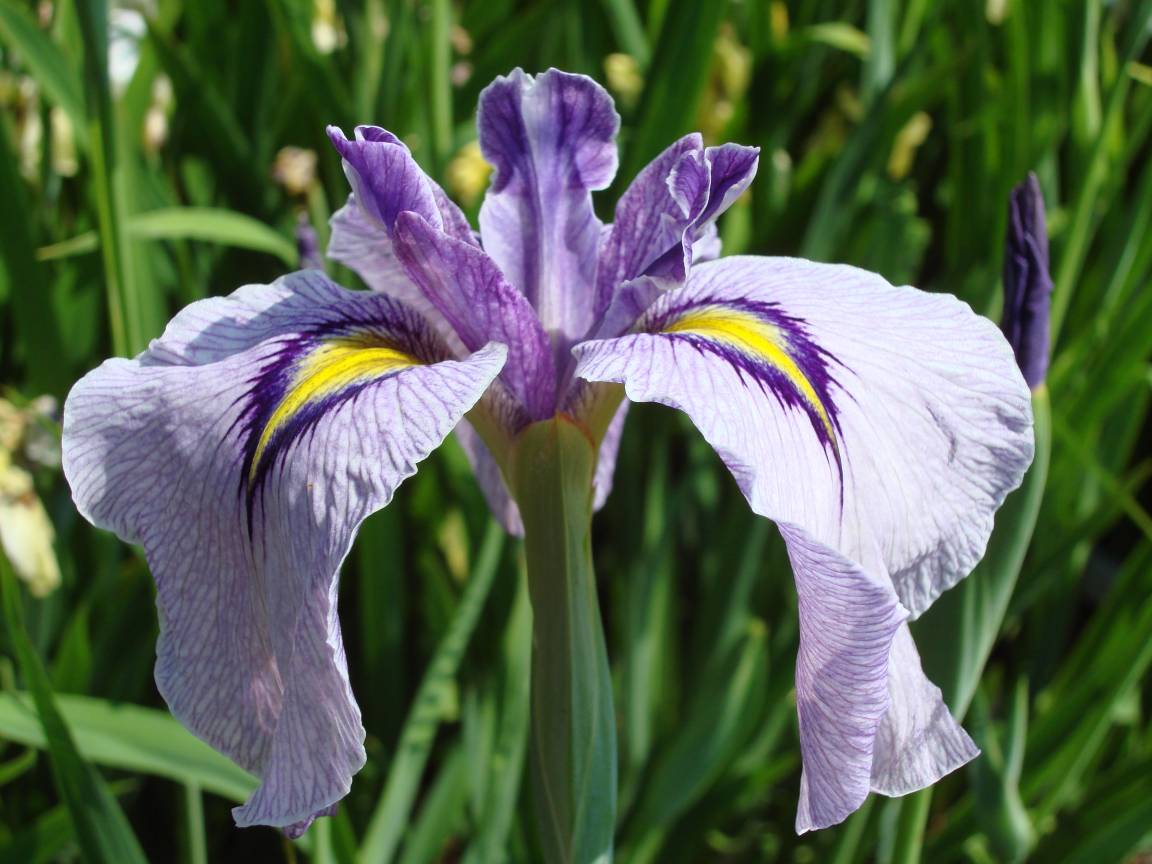
Somewhat similar to Take No Sato, this very nice plant is a light lavender with a strongly contrasting signal.
Its foliage occasionally grows with accordion folding. The name means “Heaven of the legend”. [WITHDRAWN FOR INCREASE]< | |
|
| TAKE NO SATO |
(Hiroshi Shimizu, 2008) |
45" | M |
 |
|
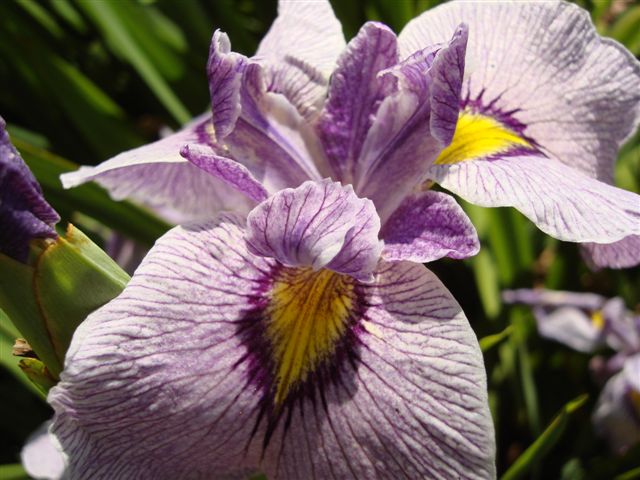
This very distinctive tall variety is easily recognized in the garden. There is a pleasing combination of colors and presentation of the flowers.
Stalks are nicely branched and carry the flowers above the foliage. The flowers are evenly veined red violet which is darker on the underside of the falls.
The falls tend to be a little cupped and rolled. The name means “Village of Bamboo”. AM2015 [sold out] | |
|
| TAREMURASAKI |
(Hiroshi Shimizu, 2011) |
45-48" | M |
 |
|
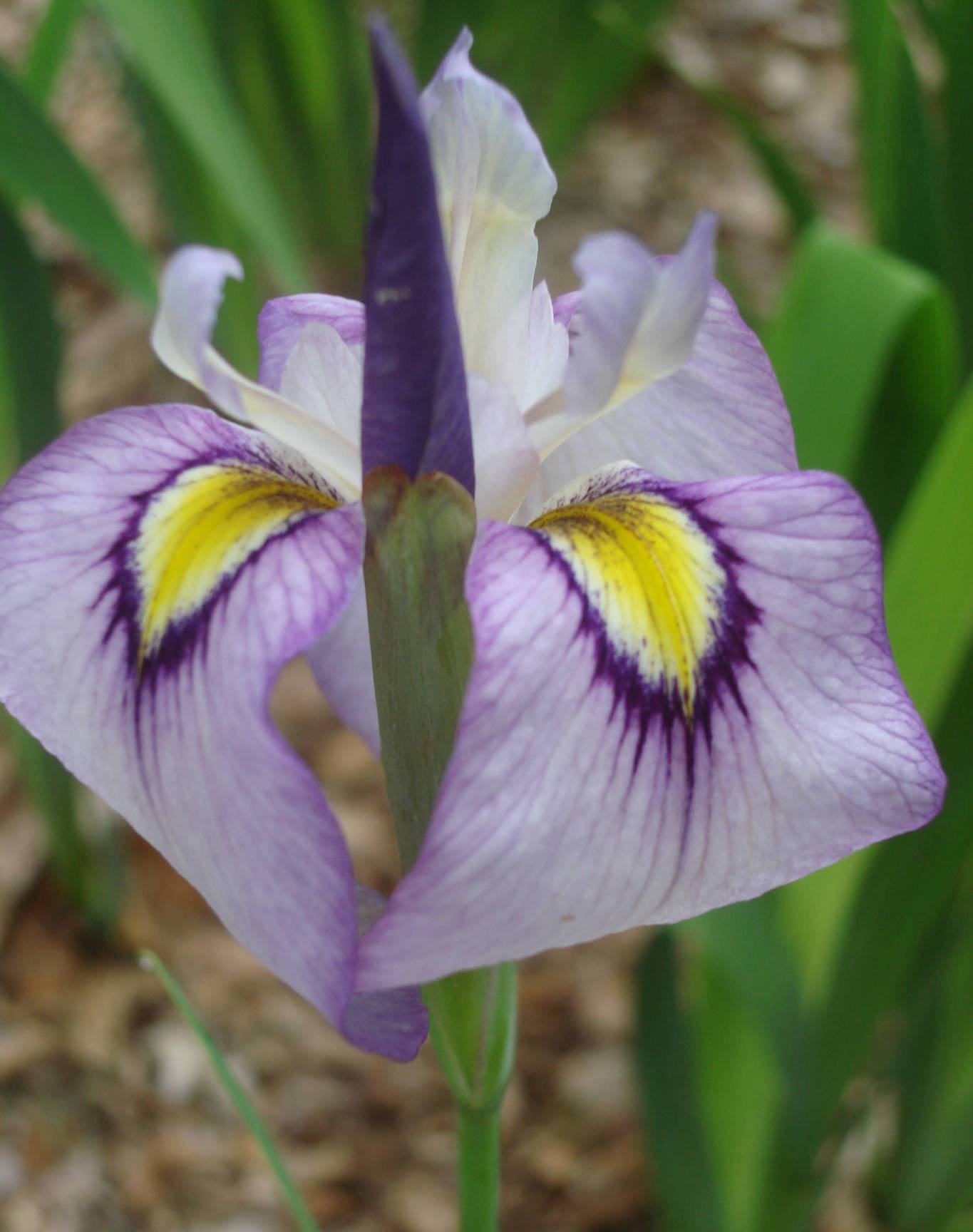
Thi flower has a form which is more desirable to the Japanese taste than to our American Iris Society judges.
The proportion of the falls is a little long, making the flower have a “droopy” appearance, but to me the appearance is delicate.
The plant is very vigorous and the stalk has three branches plus the terminal. As a landscape plant in an Oriental garden TAREMURASAKI will excel.
The name means “Drooping Purple”. [WITHDRAWN FOR INCREASE] | |
| TSUKIYONO |
(Hiroshi Shimizu, 2005) |
44" | M |
 |
|
TSUKIYONO is a wonderful garden specimen, lavender with purple eyelash markings and a narrow purple rim.
The style arms are cream and the signal is bright yellow. The well-branched stalks are very tall and carry at least 9 buds.
The plant is vigorous, increases rapidly and has nice green foliage. Some foliage may crinkle slightly.
The name means “The Moonlight Field”. $10.00 | |
|
| VIOLET SWALLOWS |
(Harris, 2016) |
60" | L |
 |
|
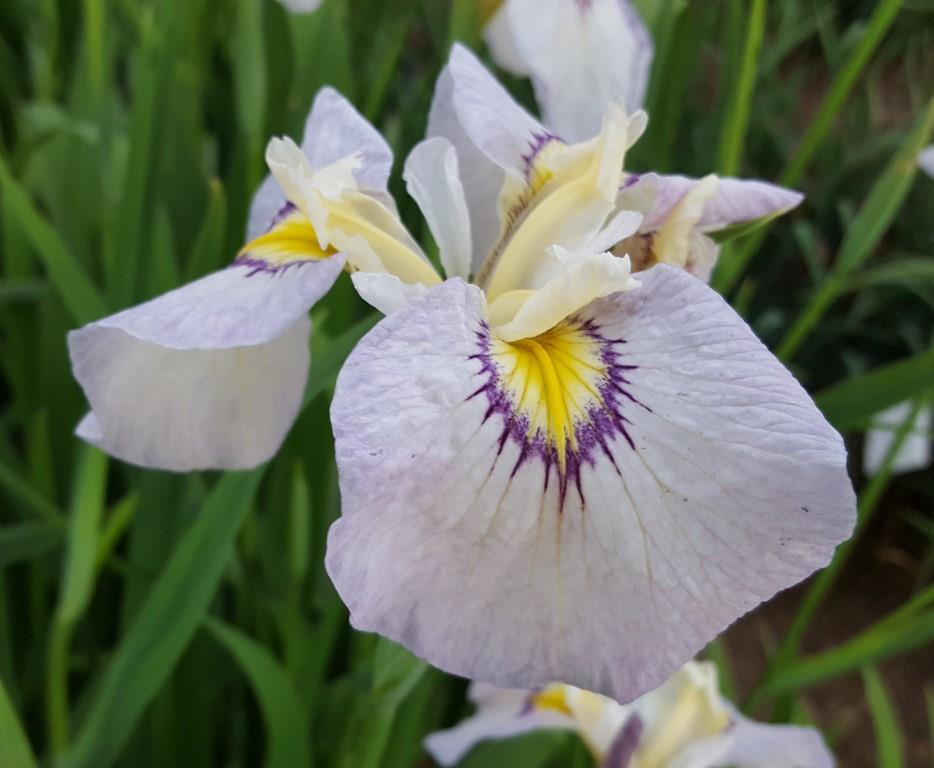
Pastel violet with bright yellow signal surrounded by dark purple eyelash markings. Vigorous. [withdrawn for increase] | |
|
| YARAI |
(Hiroshi Shimizu, 2011) |
27" | VE |
 |
|
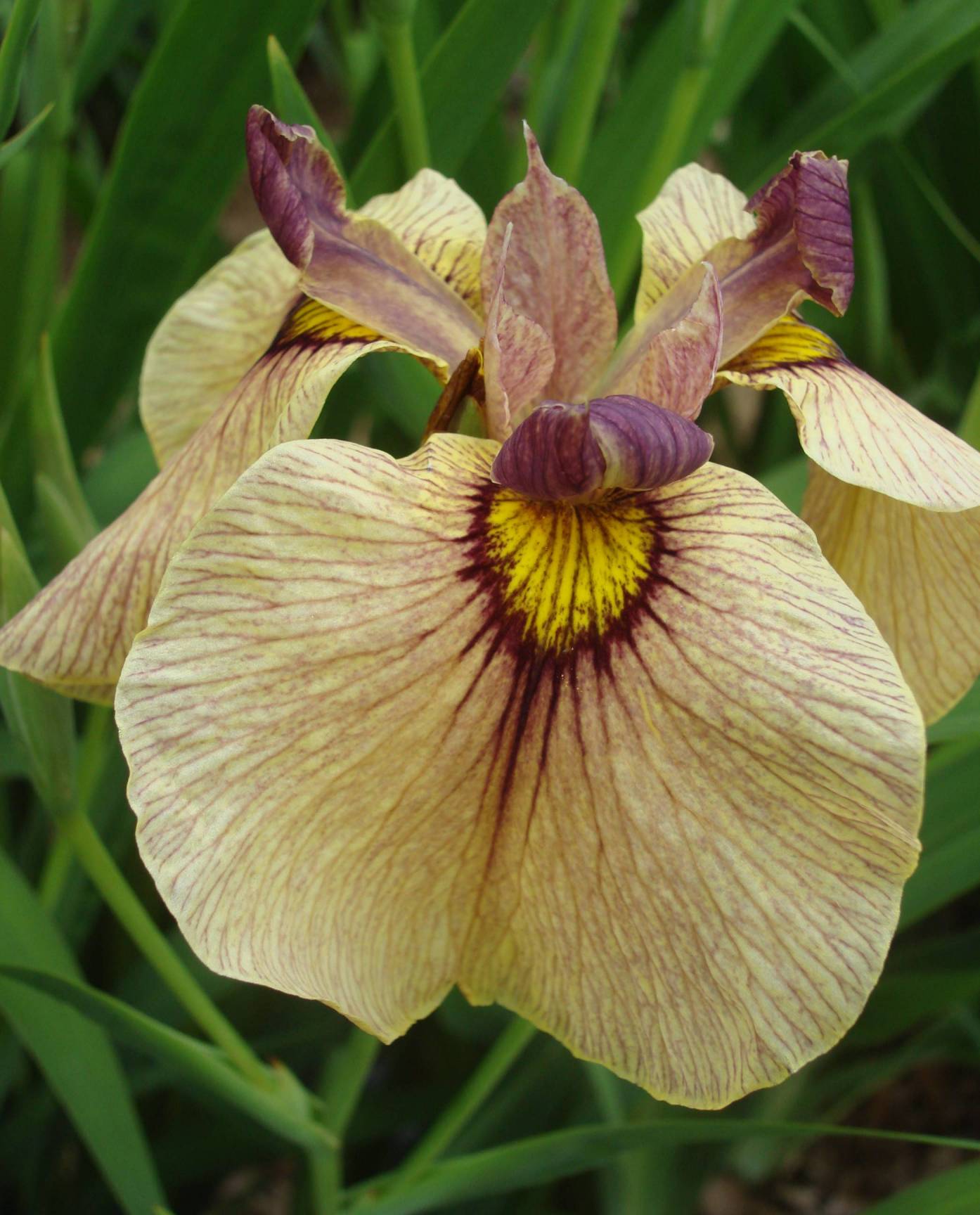
Yarai is one of the first pseudatas to bloom. It is one of Mr. Shimizu’s medium height varieties blooming at only 27 inches
but the stalks are well branched and carry lots of buds for a long bloom season. The flowers present an orange appearance from a distance
but are actually a light yellow background which is lightly veined and speckled wine red. The prominent deep yellow signal adds pizzazz.
The name means “Night Thunder”. HM2015 $10.00 | |
|
| YASHA |
(Hiroshi Shimizu, 2010) |
48" | M |
 |
|
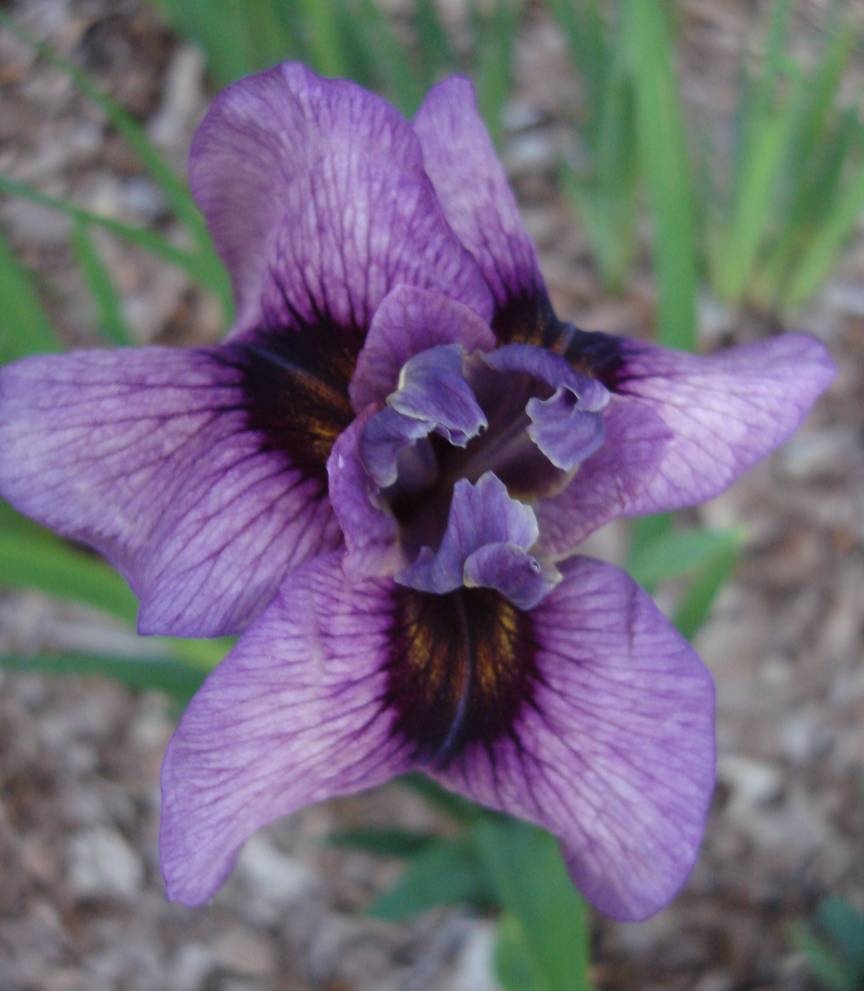
Can't you just see the eyes of the devil in this flower? The color changes dramatically as the flower opens,
giving a lovely contrast on the clump of many different shades. Also note the thin dark edge surrounding the falls.
The name means “The female devil”. AM2017 $10.00 | |
|
| YUKIYANAGI |
(Hiroshi Shimizu, 2010) |
44-48" | EML |
 |
|
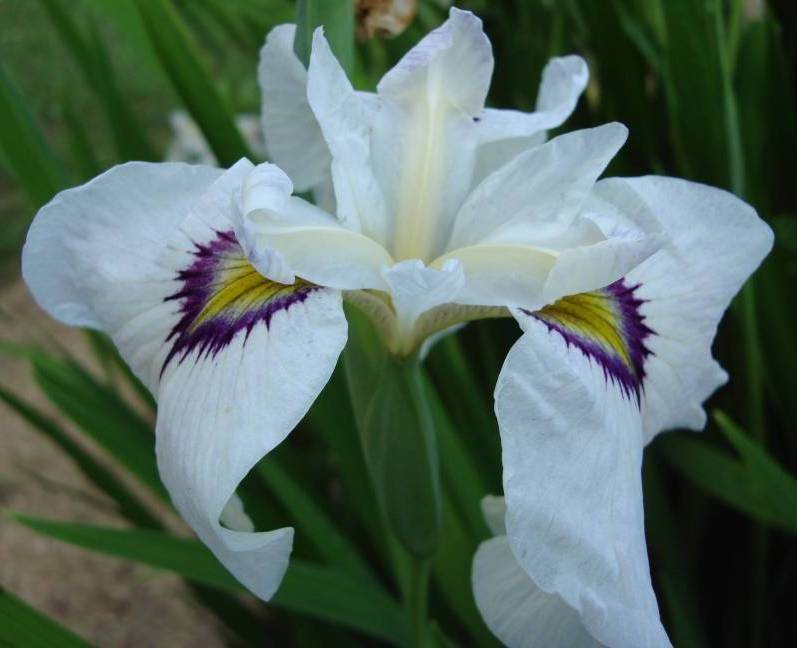
Yukiyanagi blooms taller than other whites with purple eyelash patterns, and the foliage is also tall and vigorous.
Numerous buds are held on the terminal plus two branches, and the clump was in bloom from early to late in the season.
The name means “Willow in the Snow”. AM2016 $10.00 | |
|